
Encrypted
Consent-based
Deadline clarity
For Students
Recommendation letters shouldn’t feel like begging.
Students don’t just need “a letter.” You need advocacy, continuity, and a system that preserves strong support while respecting confidentiality and academic integrity.
Consent-first • Encrypted • Built for long-term opportunity
Common use cases
Built for the programs that shape your future
Master’s programsPhD programsMedical schoolLaw schoolMBA programs
The Hidden Reality
Students don’t “collect” letters — they disappear.
The dominant model is one letter, one portal, gone. That structure is why faculty get flooded and students panic every cycle.
Pain: One letter, one portal, disappears
- The letter is context-specific
- The faculty member controls submission
- The student does not “own” the letter
- Reuse requires the professor to resubmit
- Nothing persists year to year
Solution: Preserve value without breaking integrity
- Securely store letters as long-lived assets
- Enable controlled reuse with explicit student consent
- Reduce re-requests by referencing prior work
- Keep faculty control over approvals & sharing rules
- Make the process durable across cycles

Why Students Rarely “See” the Letter
The confusion is not your fault.
Two reasons explain why letters often feel invisible:
1
Confidentiality
Programs trust letters more if students waive the right to see them. Letters are assumed to be more honest.
2
Integrity
It prevents editing, pressure, or gaming. In practice, the letter exists only inside the receiving institution.
This confusion is a signal.
- Students lack visibility
- The system is archaic
- Value is hidden
- Ownership is unclear
Pain Points → Solutions
Make the process understandable and fair.
Brief, high-impact pain points with side-by-side product outcomes (the deeper dives can live on separate pages later).
Emotionally hard asking
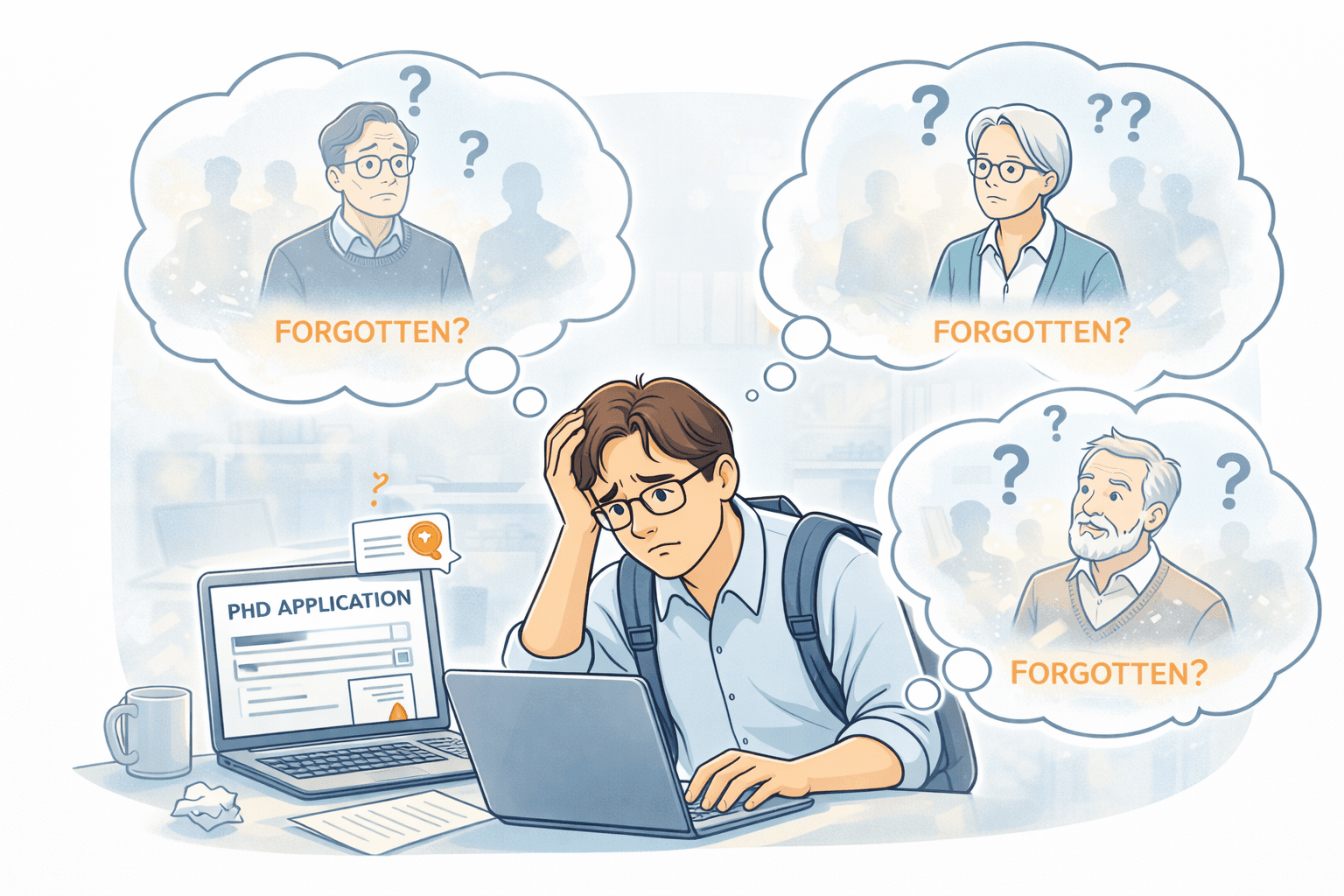
Asking feels vulnerable. Students wonder if they’re bothering the professor.
Structured requests reduce anxiety
A guided request form creates clarity and respect: context, deadlines, and purpose — without awkward follow-ups.
Fear of “lukewarm” letters
Students fear a yes that results in a generic or weak letter.
Better inputs → better advocacy
Provide achievement highlights, reminders, and talking points that help faculty write strong, specific letters.
No transparency
Students don’t know if something is happening until it’s too late.
Status + deadline tracking
Track Requested → In Progress → Completed, and keep deadlines visible to reduce panic.
Repeating the process every year
Each cycle restarts from scratch: new portals, new links, new deadlines.
Consent-based reuse
Reuse strong letters with explicit consent rules, reducing repeat work and preserving continuity.
Losing access after graduation
After you leave, everything becomes scattered and hard to retrieve.
Central long-term archive
Keep your recommendation history and approved letters securely stored (without breaking confidentiality).
Inequity in access
Students with better relationships have an easier time navigating the system.
Standardization increases equity
Structured requests and clear expectations reduce hidden advantages and make outcomes more fair.
The Opportunity
A great letter can change the trajectory of your life.
Many students underestimate letter quality and assume they can’t influence it. That belief leads to generic letters, missed opportunities, and wasted social capital.
Students assume:
- “Any letter is fine”
- “I just need three”
- “The content doesn’t matter”
- “I can’t influence quality”
This leads to:
- Generic letters
- Overworked faculty
- Missed opportunities
- Wasted social capital

What students actually want
Not just a letter — advocacy, continuity, trust, leverage.